
In News & Events
Year-wise highlights from the work of Mr. Amod K. Kanth & Prayas JAC Society
Latest Events
16 June 2026 · India International Centre, New Delhi
New
Speaker at Seminar on "Presence of Women Workforce in Police Organizations at Subordinate Ranks in India"
Mr. Amod K. Kanth, Founder and Mentor of Prayas JAC Society, was invited as a speaker at the seminar organised by the India International Centre (IIC) in collaboration with the Indian Police Foundation (IPF), focusing on the growing role of women in policing at station and subordinate ranks.
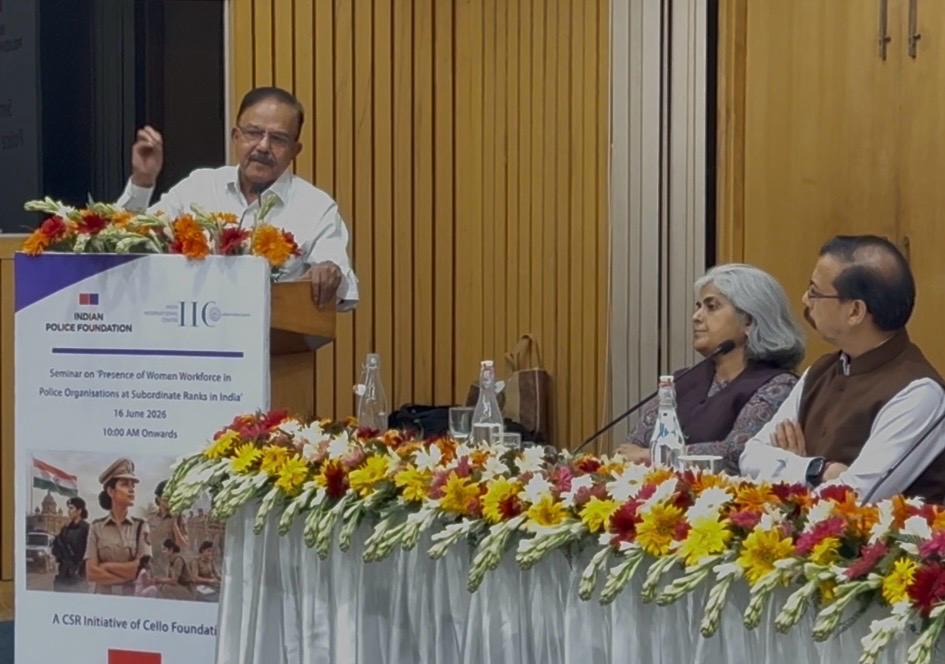
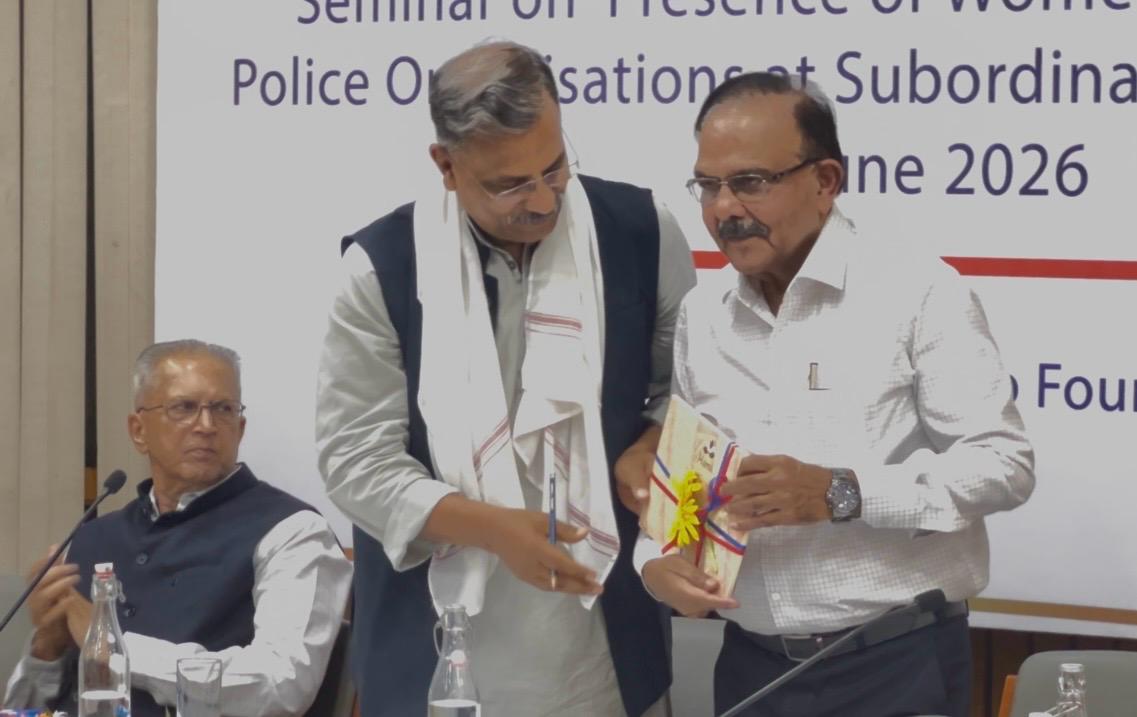
During his address, Mr. Kanth shared insights from his extensive experience in policing and social development, highlighting the significant role played by women police personnel in public welfare initiatives and community engagement. He also reflected on the early years of Prayas, where women police officers actively contributed to the organisation's growth and child-focused interventions.
Emphasising the importance of child protection, he highlighted the role of women police personnel in Special Juvenile Police Units (SJPUs), Child Welfare Police Officers (CWPOs), and Trust Desks — all critical in supporting children in vulnerable situations. Referring to key child protection laws and recent NCRB data, he stressed the need for stronger systems to safeguard children and ensure timely support and rehabilitation.
The seminar brought together police officials, researchers, and practitioners, providing a platform to discuss women's leadership in policing, gender inclusion in law enforcement, and their expanding role in child protection and community welfare.
18–19 May 2026 · Bhubaneswar, Odisha
Distinguished Speaker at Two-Day Training Programme on "Essentials of Child Protection" — NLUO
Mr. Amod K. Kanth was invited as a distinguished speaker at the Two-Day Training Programme on "Essentials of Child Protection" organised by the Centre for Child Rights (CCR), National Law University Odisha (NLUO), in collaboration with the Crime Against Women & Children Wing (CAW & CW), Odisha Police.
The training programme brought together frontline cadre police personnel, District Special Juvenile Police Unit Heads, Child Friendly Police Station personnel, State Nodal Officers, CAW & CW Officers and IAHTUs to strengthen understanding and implementation of child protection laws and mechanisms.
Mr. Kanth delivered extensive sessions on the Juvenile Justice (Care and Protection of Children) Act, 2015, its practical application, the role of police personnel, and other key child protection legislations including the Prevention of Child Marriage Act, 2006 and the Child & Adolescent Labour (Prohibition and Regulation) Act, 2016.
Drawing from decades of experience through Prayas JAC Society and its allied organisations, he shared insights on the evolution of the Juvenile Justice System, NCRB data on crimes against and by children, mechanisms for Children in Need of Care and Protection, the role of Child Welfare Committees, Mission Vatsalya, and the critical responsibilities of police personnel in ensuring child rights and protection.
The programme witnessed the participation of several eminent dignitaries including Prof. Biraj Swain, Prof. Dolly Jabbal, Smt. Shyni S, IPS, Shri Vinaytosh Mishra, IPS, and Dr. (Prof.) Kalpana Purushothaman, among others, who contributed valuable perspectives on child protection, law, mental health, and policing practices.
The sessions reflected the collective commitment towards building a stronger, more child-sensitive justice and protection system in the country.
Mr. Kanth delivered extensive sessions on the Juvenile Justice (Care and Protection of Children) Act, 2015, its practical application, the role of police personnel, and other key child protection legislations including the Prevention of Child Marriage Act, 2006 and the Child & Adolescent Labour (Prohibition and Regulation) Act, 2016.
Drawing from decades of experience through Prayas JAC Society and its allied organisations, he shared insights on the evolution of the Juvenile Justice System, NCRB data on crimes against and by children, mechanisms for Children in Need of Care and Protection, the role of Child Welfare Committees, Mission Vatsalya, and the critical responsibilities of police personnel in ensuring child rights and protection.
The programme witnessed the participation of several eminent dignitaries including Prof. Biraj Swain, Prof. Dolly Jabbal, Smt. Shyni S, IPS, Shri Vinaytosh Mishra, IPS, and Dr. (Prof.) Kalpana Purushothaman, among others, who contributed valuable perspectives on child protection, law, mental health, and policing practices.
The sessions reflected the collective commitment towards building a stronger, more child-sensitive justice and protection system in the country.
1 May 2026 · Labour Day · Bihar
Labour Day Seminar on Child Labour and Strengthening Child Protection in Bihar
Mr. Amod K. Kanth, Founder and Mentor of Prayas, was invited as an expert speaker at a seminar-cum-workshop on child labour organised by the Labour Resources and Migrant Workers Welfare Department, Government of Bihar, on the occasion of Labour Day.
Mr. Amod K. Kanth delivered a detailed address highlighting the scale, complexity, and urgency of addressing child labour and child protection in India, with a particular focus on Bihar. Drawing from the 38-year experience of Prayas, he outlined its extensive work with children in need of care and protection across 12 states, including large-scale outreach, rehabilitation, and skill development initiatives. He emphasized that child labour must be understood within a broader context of socio-economic deprivation, noting that crores of children in India remain out of school and vulnerable.
A key theme of his address was the urgent need for systematic identification of vulnerable children — those who are out of school, homeless, trafficked, or without family support. He stressed that without accurate data, particularly through the upcoming census, meaningful intervention would not be possible. He also underscored that multiple legal frameworks governing child protection — such as the Juvenile Justice Act, Child Labour Act, and POCSO Act — must be implemented in convergence, as isolated application weakens their effectiveness.
Mr. Kanth acknowledged Bihar's significant challenge in terms of child labour prevalence but also commended the state's proactive efforts, including the State Action Plan, inter-departmental convergence across 18 departments, and innovations such as the Child Labour Tracking System (CNTS). He highlighted the importance of strengthening national mechanisms like the PENCIL Portal and welcomed the revival of Special Residential Training Centres.
Referring to field-level interventions, he cited large-scale rescue and rehabilitation efforts, including operations involving thousands of children from Rajasthan and along the Indo-Nepal border, demonstrating the importance of coordinated action among multiple departments. He emphasized that child labour and human trafficking are deeply interconnected issues and must be addressed together within both policy and implementation frameworks.
The address also drew attention to policy and legislative challenges, particularly the distinction between children and adolescents under labour laws, which creates practical difficulties in enforcement given that most legal frameworks define a child as below 18 years. He noted the transition of the National Child Labour Project into broader schemes like Mission Vatsala, calling for integrated and strengthened implementation through existing institutional mechanisms, especially the Juvenile Justice system.
Concluding, Mr. Kanth emphasized that the challenge of child labour requires a comprehensive and coordinated approach involving accurate identification of children, convergence of legal and institutional frameworks, strengthened rehabilitation systems, and improved enforcement — particularly through data-driven planning and implementation in Bihar.
▶ Watch Seminar
A key theme of his address was the urgent need for systematic identification of vulnerable children — those who are out of school, homeless, trafficked, or without family support. He stressed that without accurate data, particularly through the upcoming census, meaningful intervention would not be possible. He also underscored that multiple legal frameworks governing child protection — such as the Juvenile Justice Act, Child Labour Act, and POCSO Act — must be implemented in convergence, as isolated application weakens their effectiveness.
Mr. Kanth acknowledged Bihar's significant challenge in terms of child labour prevalence but also commended the state's proactive efforts, including the State Action Plan, inter-departmental convergence across 18 departments, and innovations such as the Child Labour Tracking System (CNTS). He highlighted the importance of strengthening national mechanisms like the PENCIL Portal and welcomed the revival of Special Residential Training Centres.
Referring to field-level interventions, he cited large-scale rescue and rehabilitation efforts, including operations involving thousands of children from Rajasthan and along the Indo-Nepal border, demonstrating the importance of coordinated action among multiple departments. He emphasized that child labour and human trafficking are deeply interconnected issues and must be addressed together within both policy and implementation frameworks.
The address also drew attention to policy and legislative challenges, particularly the distinction between children and adolescents under labour laws, which creates practical difficulties in enforcement given that most legal frameworks define a child as below 18 years. He noted the transition of the National Child Labour Project into broader schemes like Mission Vatsala, calling for integrated and strengthened implementation through existing institutional mechanisms, especially the Juvenile Justice system.
Concluding, Mr. Kanth emphasized that the challenge of child labour requires a comprehensive and coordinated approach involving accurate identification of children, convergence of legal and institutional frameworks, strengthened rehabilitation systems, and improved enforcement — particularly through data-driven planning and implementation in Bihar.
▶ Watch Seminar
24 March 2026 · SNDT Women's University, Mumbai
Fourth Shri Sudhir Krishnaraj Thackersey Endowment Oration Award
Mr. Amod K. Kanth was conferred the Fourth Shri Sudhir Krishnaraj Thackersey Endowment Oration Award at SNDT Women's University, Mumbai, hosted by the Media, Communication and Development Department of Sir Vithaldas Thackersey College of Home Science.
He was presented as a highly respected figure whose extensive experience in handling complex and high-profile criminal cases has contributed significantly to the field of policing. His role in strengthening institutional frameworks and his commitment to upholding justice were acknowledged with deep admiration.
The introduction also drew attention to his meaningful work beyond policing, particularly his contributions to the social sector in the areas of child protection and rehabilitation, underscoring his enduring dedication to humanitarian causes and societal welfare. The award ceremony marked a significant recognition of Mr. Kanth's lifelong contribution to policing, child rights, and social justice.
Mr. Kanth highlighted the complex interplay between administration, law enforcement, and social welfare in India. He pointed out the structural challenges within the Indian state and the persistent gaps between constitutional ideals and ground-level reality.
He spoke about his formative years and his journey towards consolidating his career in Police and Civil society and the incidents that led to the establishment of Prayas. Highlighting the role of institutions such as women's universities in empowering women, he stressed that institutions symbolize progress in a society historically dominated by patriarchal structures.
He reflected on the prevalence of some dated Indian legislature and the persistence of colonial-era frameworks. He stated that while laws, particularly those concerning child rights, have evolved to meet global standards, there is a stark disconnect between legislative intent and ground-level execution.
He opined that children represent the most dependent and vulnerable segment of Indian society. Despite a robust legal framework, including juvenile justice provisions, the reality for many children is defined by neglect and exploitation, lack of access to education, prevalence of child labour, high rates of abuse, and homelessness.
He emphasised that there was a critical need for police personnel to transit from mere enforcers of the law to "seekers of truth," and called for a humane, community-oriented policing model. The event concluded with an engaging interaction with students and a cultural presentation addressing gender issues.
▶ Watch Oration
The introduction also drew attention to his meaningful work beyond policing, particularly his contributions to the social sector in the areas of child protection and rehabilitation, underscoring his enduring dedication to humanitarian causes and societal welfare. The award ceremony marked a significant recognition of Mr. Kanth's lifelong contribution to policing, child rights, and social justice.
Mr. Kanth highlighted the complex interplay between administration, law enforcement, and social welfare in India. He pointed out the structural challenges within the Indian state and the persistent gaps between constitutional ideals and ground-level reality.
He spoke about his formative years and his journey towards consolidating his career in Police and Civil society and the incidents that led to the establishment of Prayas. Highlighting the role of institutions such as women's universities in empowering women, he stressed that institutions symbolize progress in a society historically dominated by patriarchal structures.
He reflected on the prevalence of some dated Indian legislature and the persistence of colonial-era frameworks. He stated that while laws, particularly those concerning child rights, have evolved to meet global standards, there is a stark disconnect between legislative intent and ground-level execution.
He opined that children represent the most dependent and vulnerable segment of Indian society. Despite a robust legal framework, including juvenile justice provisions, the reality for many children is defined by neglect and exploitation, lack of access to education, prevalence of child labour, high rates of abuse, and homelessness.
He emphasised that there was a critical need for police personnel to transit from mere enforcers of the law to "seekers of truth," and called for a humane, community-oriented policing model. The event concluded with an engaging interaction with students and a cultural presentation addressing gender issues.
▶ Watch Oration
16 January 2026
Amod K. Kanth Addresses Breast Cancer Awareness at National Obstetrics & Gynaecology Conference
Participating in the Open House on "Breast Cancer Awareness, Improving Women's Health in India" at the All India Annual Conference of Obstetrics & Gynaecology was a deeply emotional experience.
Addressing over 10,000 experts and practitioners, he reflected on the alarming rise in breast cancer cases in India, inadequate screening, and late diagnosis contributing to nearly 98,337 reported deaths in 2022. He paid tribute to Dr. Ambika Anand of the UK's NHS, a two-time survivor and Prayas supporter, while affirming Prayas Health Service's commitment to nationwide awareness and screening initiatives.
16 October 2025 · New Delhi
Experts Call for Greater Space for Social Sector in Mainstream Media
Civil society leaders and media professionals gathered at India Habitat Centre for a discussion hosted by Prayas on strengthening social sector coverage.
Founder Amod K. Kanth emphasized that voluntary organisations form the "fifth pillar" of democracy and must be integral to media discourse. Prof. K. G. Suresh highlighted shrinking editorial space and lack of journalist training on health and education reporting. Veteran journalist Amitabh Srivastava stressed mutual responsibility, urging NGOs to allocate media budgets and journalism institutes to prioritize social sector training and engagement.
2025 · New Jersey, USA
Global Honour for Visionary Leadership
Mr. Amod K. Kanth was honoured in the United States at the 50th Anniversary Golden Jubilee and Conclave 2025 of the Bihar Jharkhand Association of North America (BJANA).
He received the prestigious Bihar and Jharkhand Achiever and Leadership Award, 2025, in recognition of his lifelong commitment to justice, compassion, and social transformation. Using this global platform, he also highlighted the impactful work of Prayas across India. This proud moment reflects visionary leadership and inspires continued service to reach the unreached and serve the underserved.
15 April 2025
Television Discussion on Rising Juvenile Crime
Following a tragic school stabbing incident in Govindpuri, New Delhi, Mr. Amod K. Kanth joined a live discussion on AajTak to examine the broader issue of rising juvenile crime.
Citing national crime data, the anchor highlighted alarming trends, prompting Mr. Kanth to explain that juvenile offences form a very small share of overall crime despite India's large youth population. He stressed that most cases stem from socio-economic vulnerabilities, weak family support, and negative peer or digital influences. Emphasizing rehabilitation over punishment, he underlined the importance of early intervention, parental engagement, and supportive environments to prevent such tragedies.
▶ Watch Discussion
▶ Watch Discussion
27 March 2025
Panel Address at Dissemination Workshop on Reintegration Services in India
As a panellist at the Dissemination Workshop on Directory of Reintegration Services in India, Mr. Amod K. Kanth shared valuable insights on combating human trafficking.
Drawing from his extensive experience in policing and social work, he highlighted the vulnerabilities of migrant and domestic workers, systemic gaps in protection, and challenges posed by restrictive immigration policies. He emphasized that modern trafficking largely involves forced and child labour and called for stronger legal frameworks, coordinated action, and robust reintegration systems. The session underscored the need for collective responsibility to safeguard rights and dignity.
21 March 2025
At the 4th Annual Vision and Road Safety Conference (VARS 4.0)
Mr. Amod K. Kanth graced the 4th Annual Vision and Road Safety Conference (VARS 4.0) as the Chief Guest, where over two million transport workers have been screened in the past year.
The conference brought together experts and policymakers to highlight the critical role of eye health in road safety, with over two million transport workers screened in the past year. Mr. Kanth shared insights from his policing experience, stressing the urgent need to integrate vision care into road safety frameworks. He emphasised recognising eye health as the fifth 'E' of road safety and pledged continued support for collaborative efforts to reduce accidents and save lives.
8 March 2025
Address at the 20th National Conclave & Award Function
Mr. Amod K. Kanth graced the 20th National Conclave and Award Function organised by Business Sphere Magazine as the Guest of Honour.
In his address, he highlighted the vital role of MSMEs in driving India's economic growth and stressed the need for stronger policy support, including Production Linked Incentives, to enable their expansion. He also spoke about India's development vision, underlining the importance of addressing gaps in per capita income, Human Development Index, and Sustainable Development Goals. Mr. Kanth further shared insights on Prayas' work in education, social welfare, and vocational training, emphasising inclusive and sustainable development.
4 February 2025
Keynote Address at 'Aahvaan' 2nd NGO-CSR Conclave
Mr. Amod K. Kanth was invited as a key speaker at Aahvaan, the 2nd edition of the NGO-CSR Conclave organised by Vishwa Yuvak Kendra, with participation from 23 states.
In his address, he highlighted critical gaps in CSR funding outreach to grassroots organisations and reflected on policy reforms that strengthened NGO participation. He emphasised the indispensable role of voluntary organisations in addressing social challenges, including child welfare, education, health, and poverty alleviation. Stressing India's development priorities, he called for stronger collaboration between government, corporates, and civil society to drive inclusive and sustainable growth.
29 January 2025 · Constitution Club of India, New Delhi
Address at the National Seminar on Natural Farming
Mr. Amod K. Kanth was invited as Guest of Honour at the National Seminar on Natural Farming organised by Tapsil Jati Adibasi Praktan Sainik Krishi Bikash Shilpa Kendra.
The seminar was attended by eminent dignitaries, including Shri Bhagirath Choudhary, Minister of State for Agriculture and Farmers' Welfare, Padma Shri awardee Shri Hariom Singh, Dr. K.S. Rana, and Prof. P.B. Sharma. In his address, Mr. Kanth highlighted the significance of natural farming in advancing Sustainable Development Goals, particularly Zero Hunger and Clean Water. The seminar fostered dialogue among farmers on sustainability, agricultural challenges, and the future of eco-friendly farming practices.
16 January 2025 · India Habitat Centre, New Delhi
Address at the National Conference for Mission Viksit Bharat
At the National Conference for Mission Viksit Bharat, organised by the India Achiever's Forum, Mr. Amod K. Kanth was invited as Guest of Honour.
In his address, he highlighted the journey and impact of Prayas, rooted in grassroots crisis response and now spanning 13 states. He discussed India's socio-economic challenges, human development indicators, child labour, and multidimensional poverty, referencing national policies and global data. Emphasising the Government's SDG roadmap and Vision 2047, he underlined the urgent need to strengthen health, education, poverty alleviation, and child protection systems to realise the goal of a developed and inclusive India.
2025
Reflections on Juvenile Justice and Child Protection
At the launch of the iProbono study report on the incarceration of children in adult prisons, Mr. Amod Kanth participated as a panellist, sharing valuable insights from decades of experience.
The discussion highlighted systemic failures in age determination, despite clear safeguards under the Juvenile Justice Act. Testimonies revealed how lack of sensitivity, awareness, and accountability across police, judiciary, and prison systems leads to grave injustice. The dialogue emphasised the urgent need for continuous sensitisation, institutional accountability, victim compensation, and systemic reform to ensure that no child is ever imprisoned in adult jails.
▶ Watch Video
▶ Watch Video
14 February 2024
On Gender Bias and the Concept of 'Virasat'
Mr. Amod K. Kanth addressed the recent public debate triggered by actor Chiranjeevi's remarks on family legacy, responding to concerns about sexism and deep-rooted cultural beliefs.
Mr. Kanth explained the cultural notion of virasat, noting that such statements often reflect a deep-rooted belief that only sons can carry forward family name and inheritance. He observed that while daughters are cherished, underlying social and emotional biases persist. Highlighting the broader implications, he cautioned that such mindsets reinforce gender discrimination and may even influence practices addressed under the PNDT Act, calling for greater social awareness and gender-sensitive thinking.
▶ Watch Video
▶ Watch Video
